

Understanding Door Lock Components: Essential Parts for Security
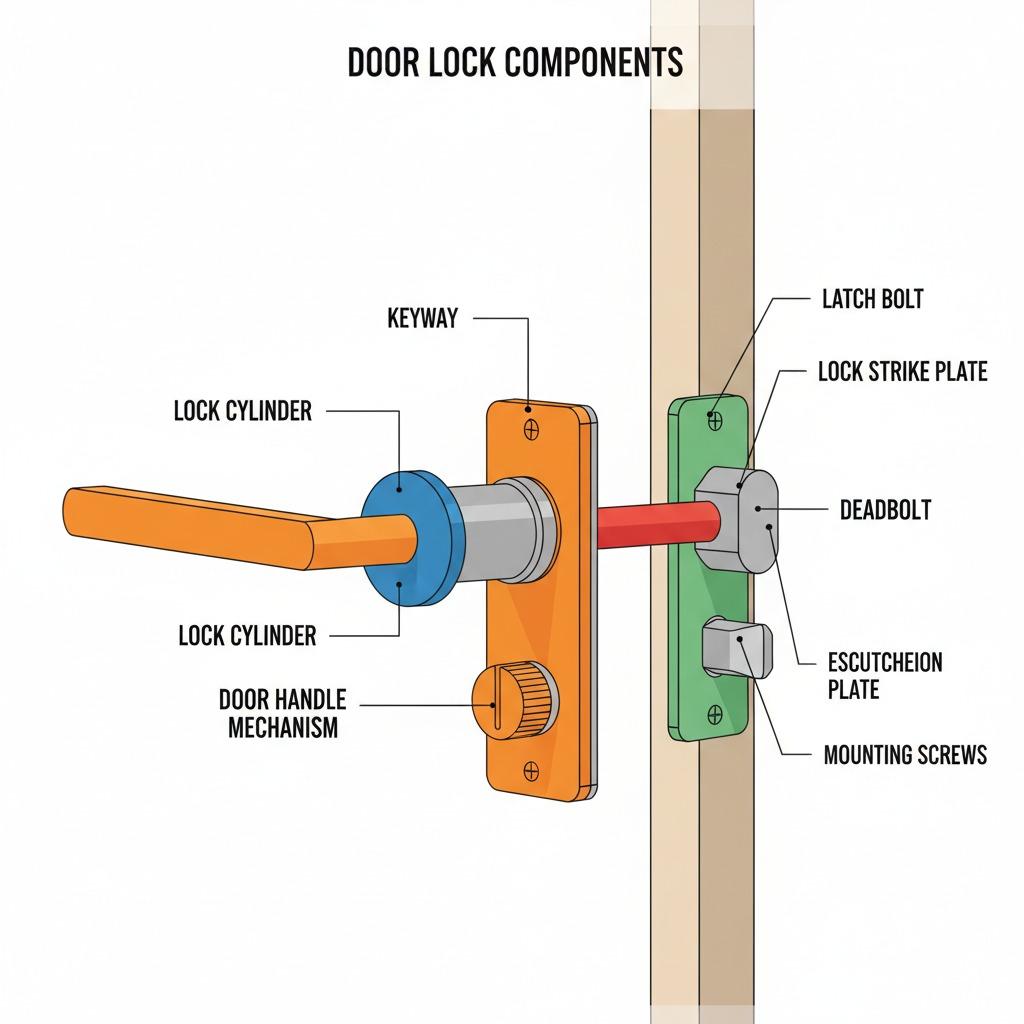
When it comes to home security, door lock components play a crucial role in ensuring your doors remain impenetrable to intruders. These essential elements, including door lock parts like the lock cylinder and deadbolt, work together to provide a robust defense. In this article, we'll explore the intricacies of these components, highlighting their functions and why they're vital for any locking system. Whether you're a homeowner looking to upgrade your security or a professional installer, understanding these parts can help you make informed decisions.
The Importance of the Lock Cylinder in Door Lock Components
The lock cylinder is one of the most critical door lock components, serving as the heart of the locking mechanism. This cylindrical device houses the pins or tumblers that interact with the key to allow or prevent access. Made from durable materials like brass or hardened steel, the lock cylinder ensures that only the correct key can turn it, thereby securing the door. Without a high-quality lock cylinder, even the strongest door could be vulnerable to picking or bumping techniques used by burglars.
In modern door lock parts, lock cylinders often come in various types, such as pin tumbler or wafer designs, each offering different levels of security. For instance, a double-sided cylinder allows key entry from both sides of the door, ideal for exterior doors. Regular maintenance of the lock cylinder is essential; dust and wear can cause it to stick, compromising security. When replacing door lock components, always opt for cylinders that meet ANSI Grade 1 standards for maximum resistance to forced entry.
Deadbolt: A Key Player Among Door Lock Parts
Among door lock parts, the deadbolt stands out as a non-retractable locking mechanism that extends into the door frame, providing superior strength against kicking or prying attempts. Unlike spring-loaded locks, the deadbolt doesn't compress easily, making it a staple in high-security setups. Single-cylinder deadbolts use a key on the outside and a thumb turn inside, while double-cylinder versions require keys on both sides for added protection in areas with glass panels.
Integrating a deadbolt into your door lock components enhances overall durability. These bolts are typically made from solid brass or steel, with throw lengths of at least one inch to ensure deep engagement with the strike plate. Homeowners should consider installing deadbolts on all exterior doors, as they can deter up to 80% of break-in attempts according to security experts. When selecting deadbolts as part of your door lock parts, look for features like anti-saw protection or hardened steel construction to withstand sophisticated attacks.
Lock Strike Plate: Reinforcing Your Door Lock Components
The lock strike plate is an often-overlooked but vital element in door lock components, acting as the metal plate mounted on the door jamb where the deadbolt or latch engages. It reinforces the connection between the door and frame, distributing force during lock engagement and preventing the door from being forced open. Standard strike plates are simple, but heavy-duty versions with extended screws into the wall stud offer even greater security.
When upgrading door lock parts, aligning the lock strike plate properly is crucial; misalignment can lead to premature wear or failure. For wooden doors, using a reinforced lock strike plate made from stainless steel can significantly boost resistance to door-jamb attacks. In commercial settings, box strike plates provide additional depth for longer deadbolts, ensuring a secure fit. Remember, the lock strike plate's condition directly impacts the efficacy of your entire locking system, so inspect it regularly for signs of bending or loosening.
Door Handle Mechanism: Functionality Meets Security in Door Lock Parts
The door handle mechanism combines aesthetics with functionality, serving as the user interface for your door lock components. This assembly includes levers, knobs, and internal linkages that operate the latch or deadbolt. Modern door handle mechanisms often incorporate ergonomic designs for easy gripping, while integrating with electronic or smart locks for keyless entry.
In terms of door lock parts, the door handle mechanism must be robust to prevent tampering. Materials like zinc die-cast or forged steel ensure longevity, especially in high-traffic areas. For example, the CIMC-D23 series handles exemplify this durability, crafted from 20Mn material for high-strength applications. The CIMC-D23-07A forging type, with a 322 mm length and Ø10.5 mm diameter, offers an elegantly forged design for enhanced grip, weighing just 0.87 kg for maneuverability without sacrificing strength.
Similarly, the CIMC-D23-07B press type features a 330 mm length with a distinctive R20 radius and segments of 240 mm and 180 mm, ensuring structural integrity through precise manufacturing. For a streamlined look, the CIMC-D23-07C forging type without a hole mirrors the 07A model but prioritizes aesthetics. These door handle mechanisms are perfect for equipment requiring reliable performance, blending security with practical design in your overall door lock components setup. When choosing door lock parts, consider how the handle mechanism integrates with other elements like the deadbolt for seamless operation.
Integrating Door Lock Components for Optimal Security
To achieve comprehensive protection, all door lock components must work in harmony. The lock cylinder secures entry, the deadbolt provides the lock's backbone, the lock strike plate anchors it, and the door handle mechanism offers accessible control. Neglecting any one part can create vulnerabilities, so a holistic approach is key.
For instance, pairing a high-security lock cylinder with a heavy-duty deadbolt and reinforced lock strike plate amplifies defense. In door lock parts selection, compatibility is essential; mismatched components can lead to operational issues. Home improvement stores and online retailers offer kits that bundle these elements, but custom configurations allow for tailored security. Additionally, incorporating smart technology into door handle mechanisms, like those in the CIMC-D23 series, adds convenience without compromising on robust door lock components.
Regular audits of your door lock parts are recommended. Check for wear on the lock cylinder, test the deadbolt's throw, ensure the lock strike plate is secure, and verify the door handle mechanism's smoothness. Professional installation can prevent common pitfalls, ensuring your system performs optimally. By investing in quality door lock components, you're not just locking a door—you're safeguarding your peace of mind.
Maintaining and Upgrading Your Door Lock Components
Maintenance is crucial for the longevity of door lock parts. Lubricate the lock cylinder annually with graphite powder to keep it smooth, and tighten screws on the lock strike plate to maintain alignment. For the door handle mechanism, clean regularly to prevent grime buildup that could affect operation.
Upgrading door lock components can be straightforward. Start with assessing current weaknesses—perhaps replace an old deadbolt with a modern, pick-resistant model. Integrating durable options like the CIMC-D23 handles ensures your door lock parts withstand daily use. These models, ranging from 0.87 to 0.98 kg, offer precision and strength, ideal for both residential and industrial applications.
In conclusion, mastering door lock components empowers you to build a fortified home. From the lock cylinder's precision to the deadbolt's unyielding hold, each part contributes to unbreakable security. Explore options like the CIMC-D23 series for handles that elevate your setup, ensuring every door lock part is ready for any challenge.