

Discovering the 40 Foot Container Home Floor Plan
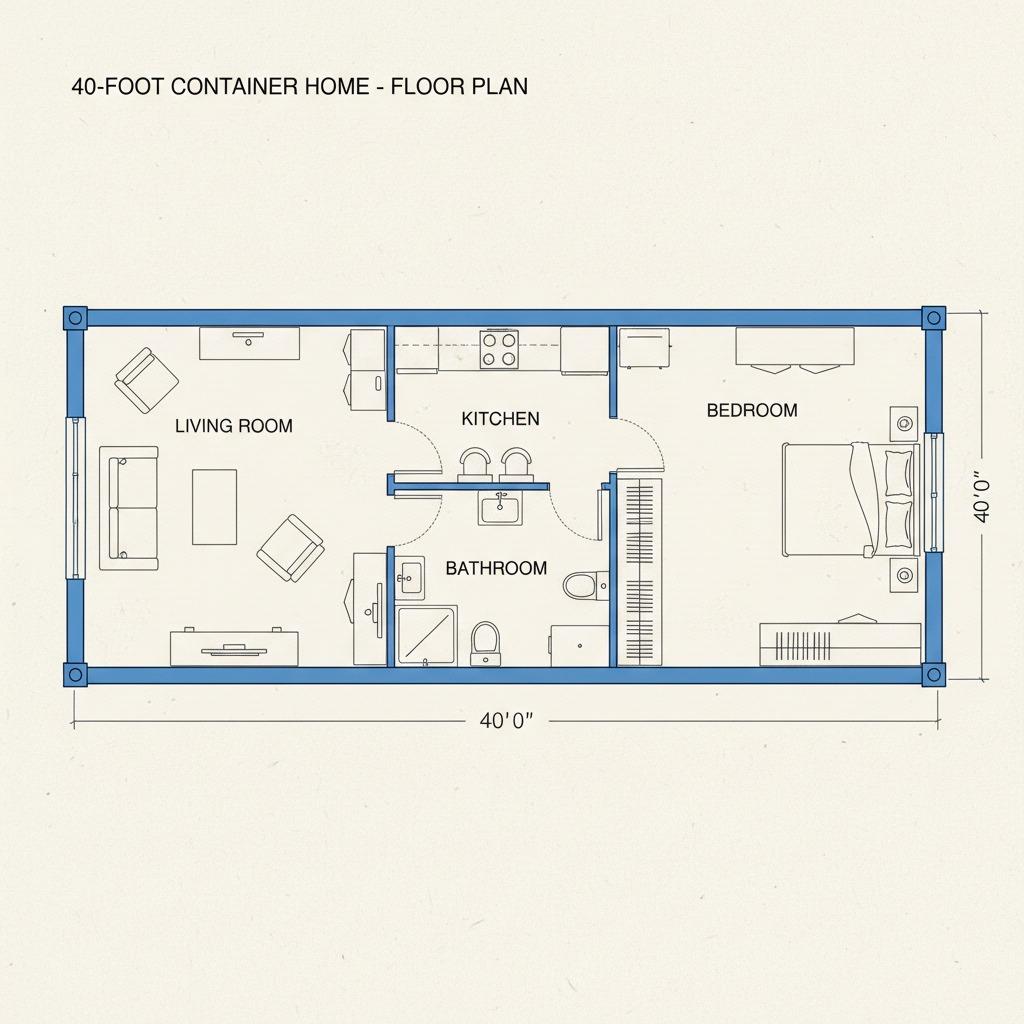
Exploring a 40 foot container home floor plan opens up exciting possibilities for innovative and sustainable living. This design leverages the standard dimensions of a shipping container to create a compact yet functional home, typically measuring 40 feet in length, 8 feet in width, and 8.5 feet in height. The 40 foot container home floor plan is ideal for those seeking an affordable alternative to traditional housing, offering a blank canvas for customization while promoting eco-friendly construction. With its robust steel structure, it withstands various climates and can be modified to include insulation, windows, and doors without compromising integrity.
One of the primary appeals of the 40 foot container home floor plan is its versatility. Homeowners can transform this single container into a studio-style residence or combine multiple units for expanded space. Key elements often include an open-plan living area that flows seamlessly into a kitchenette and sleeping quarters, maximizing the limited square footage of about 320 square feet. Natural lighting is enhanced through strategically placed skylights and large sliding doors, creating an airy atmosphere. Ventilation systems and energy-efficient appliances further contribute to a comfortable, low-maintenance lifestyle.
Integrating Shipping Container House Design Principles
When delving into shipping container house design, the 40 foot container home floor plan serves as a foundational blueprint. Shipping container house design emphasizes modularity, allowing for easy stacking or side-by-side arrangements to form multi-room structures. For instance, a single 40-foot unit can house a bedroom at one end, a bathroom in the middle, and a living space at the other, with plumbing and electrical systems routed efficiently along the container's length. This approach not only reduces construction time but also minimizes material waste, aligning with green building practices.
Customization in shipping container house design is boundless. Exterior finishes like wood cladding or metal siding can blend the industrial look with residential aesthetics, while interior walls made from lightweight partitions allow for flexible reconfiguration. In a 40 foot container home floor plan, incorporating lofted sleeping areas can double the usable space, turning a linear layout into a multi-level haven. Solar panels on the roof and rainwater collection systems are common additions, enhancing off-grid capabilities and reducing utility costs over time.
Safety and durability are paramount in shipping container house design. The corten steel used in containers resists corrosion, but proper insulation—such as spray foam or rigid panels—is essential to prevent condensation and maintain temperature control. Ventilation must be addressed to avoid moisture buildup, especially in humid environments. A well-thought-out 40 foot container home floor plan includes fire-resistant materials and reinforced entry points, ensuring the home meets local building codes and provides long-term security.
Exploring Container Home Blueprints in Detail
Container home blueprints provide the technical roadmap for realizing your 40 foot container home floor plan. These blueprints detail structural modifications, from cutting openings for windows to reinforcing floors for added weight. A typical container home blueprint for a 40-foot unit might outline a galley kitchen along one wall, featuring compact cabinets, a sink, and a two-burner stove, opposite a fold-out dining table that saves space when not in use. The bedroom area could include built-in storage under a raised platform bed, optimizing every inch.
Detailed container home blueprints also specify electrical and plumbing layouts. Wiring runs along the container's frame to outlets and lighting fixtures, while water lines connect to a central tank or municipal supply. For a 40 foot container home floor plan, blueprints often recommend zoning for heating and cooling, such as mini-split systems that efficiently manage the enclosed space. These plans are scalable; for families, combining two containers via blueprints can create separate bedrooms and a communal area, expanding to around 640 square feet.
Professional container home blueprints ensure compliance with zoning laws and seismic standards, particularly in earthquake-prone areas where containers' rigidity is an asset. Software tools like AutoCAD allow designers to visualize 3D renderings, helping owners preview their 40 foot container home floor plan before construction begins. Budget considerations are outlined too, with costs ranging from $20,000 for a basic setup to $80,000 for fully finished versions, depending on finishes and features.
Optimizing Modular Container Home Layout
A modular container home layout takes the 40 foot container home floor plan to the next level by emphasizing prefabrication and easy assembly. In this layout, sections of the container are built off-site in a factory, then transported and bolted together on location, speeding up the build process to mere weeks. The modular approach allows for standardized components, like pre-wired walls and insulated panels, ensuring quality control and reducing on-site labor.
Within a modular container home layout, the 40 foot container home floor plan can incorporate smart zoning. For example, the front third might serve as an entryway and living room with large glass doors for outdoor connectivity, the middle as a kitchen and bath combo for efficiency, and the rear as a private bedroom suite. Multi-container setups in modular designs enable L-shaped or even two-story configurations, providing privacy and separation of spaces.
Sustainability is a core benefit of modular container home layout. Recycled shipping containers reduce the demand for new materials, and modular construction cuts down on transportation emissions by assembling locally. In a 40 foot container home floor plan, features like passive solar design—orienting windows south for natural heat—complement this eco-focus. Indoor-outdoor flow is enhanced with decks or patios attached to the modular units, fostering a connection to nature.
Accessibility is another advantage in modular container home layout planning. Elevators or ramps can be integrated into multi-level designs, making them suitable for aging in place. Customization options include eco-materials like bamboo flooring and low-VOC paints, creating a healthy indoor environment. Overall, a well-executed modular container home layout transforms the straightforward 40 foot container home floor plan into a modern, adaptable living solution.
Benefits and Considerations for Your Container Home
Embracing a 40 foot container home floor plan brings numerous benefits, from cost savings to rapid deployment. Compared to stick-built homes, container homes can be 20-30% cheaper, with the modular aspect allowing for phased expansions as needs evolve. The shipping container house design's portability means it's feasible for remote locations or temporary housing, appealing to adventurers or those in transient professions.
However, considerations are key. Site preparation, including foundation work to level the ground and anchor the container, is crucial for stability. Local regulations vary; some areas require special permits for container homes, so consulting professionals early is advisable. Insulation and climate control must be prioritized to combat the container's natural thermal bridging.
In terms of lifestyle, the compact nature of a 40 foot container home floor plan encourages minimalist living, reducing clutter and promoting mindfulness. With thoughtful container home blueprints and modular container home layout, it becomes a stylish, efficient space that rivals conventional homes. Whether for a starter home, guest house, or retirement retreat, this design offers a unique path to homeownership that's both practical and forward-thinking.