

Understanding Door Lock Components: Essential Parts for Security and Functionality
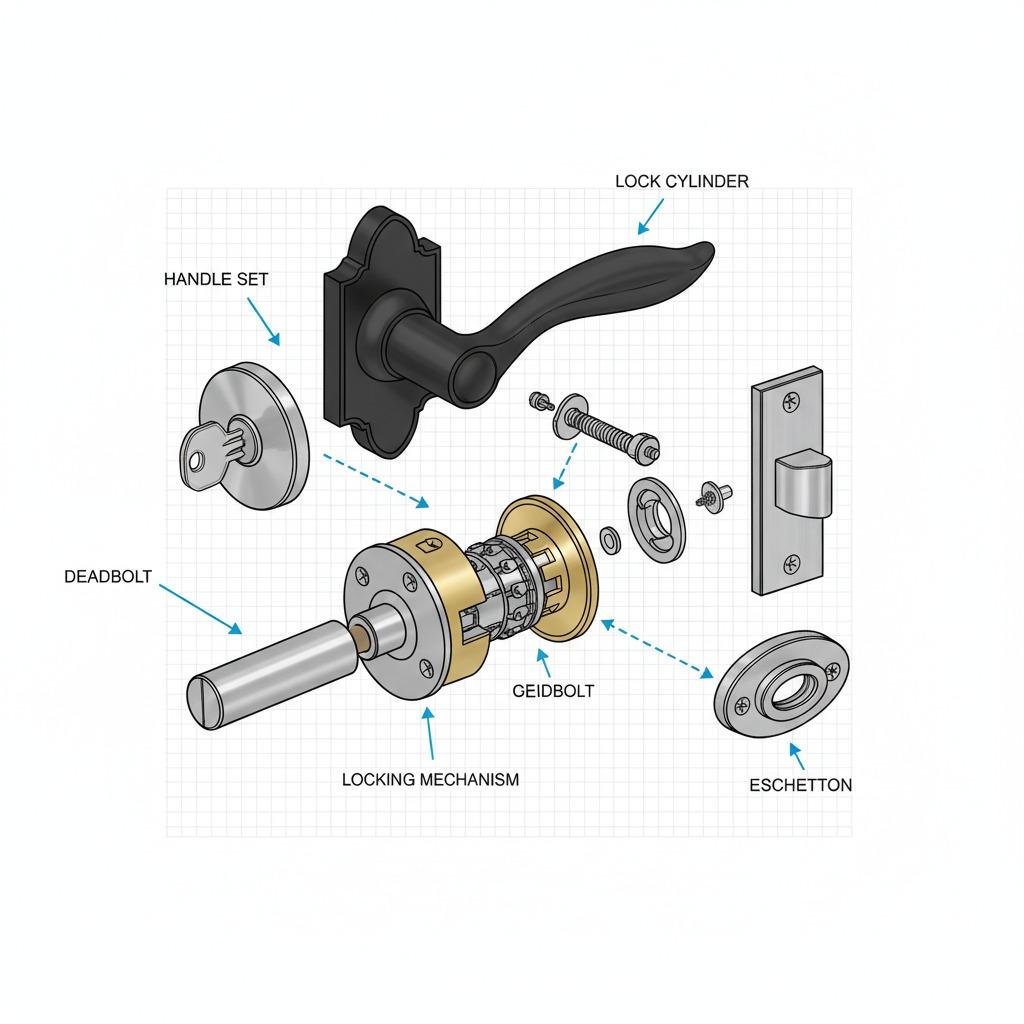
Door lock components form the backbone of any secure locking system, ensuring that doors remain protected against unauthorized access while providing ease of use. In modern applications, from residential homes to industrial equipment like containers, these components are designed with precision to withstand daily wear and environmental challenges. For instance, high-quality door lock components, such as those in CIMC's metal handle series, integrate seamlessly with locking mechanisms to offer both durability and aesthetic appeal. This article explores key door lock components, including the lock cylinder, deadbolt, handle set, strike plate, escutcheon, and locking mechanism, highlighting their roles and how they contribute to overall security.
The Role of the Lock Cylinder in Door Lock Components
The lock cylinder is a critical element among door lock components, serving as the core where the key is inserted to operate the lock. It houses the pins or tumblers that must align perfectly for the lock to turn, providing the first line of defense against picking or bumping techniques. In high-security setups, such as those used in industrial doors, the lock cylinder is often made from hardened materials to resist drilling. CIMC's innovative designs, like the D23-07 series, complement these cylinders by offering robust integration points. For example, the forged structure in models like CIMC-D23-07A ensures that the cylinder interfaces smoothly with the handle, enhancing the overall locking mechanism. Understanding the lock cylinder's mechanics helps in selecting door lock components that match the security needs of your application, whether for a simple home door or heavy-duty equipment.
Proper maintenance of the lock cylinder involves regular lubrication to prevent sticking, which can compromise the locking mechanism. Over time, exposure to dust or moisture can degrade its performance, so choosing door lock components with protective coatings is advisable. In the context of CIMC's products, the 20Mn alloy steel used in their handles pairs well with advanced cylinders, providing a balance of strength and corrosion resistance. This combination not only secures the door but also ensures longevity, making it ideal for environments like logistics or construction sites where reliability is paramount.
Deadbolt: A Sturdy Pillar in Door Lock Components
Among essential door lock components, the deadbolt stands out for its role in providing robust security by extending a solid metal bolt into the door frame, preventing forced entry through kicking or prying. Unlike spring-loaded locks, the deadbolt relies on manual or key-operated action, making it a staple in both single-cylinder and double-cylinder configurations. In industrial settings, such as container doors, the deadbolt must endure high-impact forces, which is where door lock components like CIMC's forged handles come into play. The CIMC-D23-07B, with its press-type flat structure, offers a stable grip for operating the deadbolt, ensuring smooth engagement even under load.
The effectiveness of a deadbolt within door lock components depends on its throw length—typically 1 to 2 inches—and material quality. High-grade steel deadbolts resist tampering, and when paired with a reliable locking mechanism, they form an impenetrable barrier. For users dealing with heavy doors, integrating a handle set that matches the deadbolt's strength is crucial. CIMC's series, weighing between 0.87 to 0.98 kg, provides the necessary leverage to operate the deadbolt effortlessly, reducing user fatigue in frequent-use scenarios like warehouse access points.
Installation tips for deadbolts include aligning them precisely with the strike plate to avoid misalignment issues that could weaken the system. Regular checks ensure that all door lock components, including the deadbolt, function cohesively, maintaining the integrity of the entire setup.
Handle Set: Enhancing Usability in Door Lock Components
The handle set is a user-facing part of door lock components, combining levers or knobs with the internal locking elements to facilitate easy operation. It not only allows for smooth door opening but also integrates with the locking mechanism for secure latching. In premium designs, like CIMC's CIMC-D23-07A/B/C metal handle series, the handle set transcends basic functionality, incorporating ergonomic shapes for better grip and industrial aesthetics. Tailored for high-end equipment, these handles feature lengths of 320-330 mm and widths of 21-31.5 mm, making them perfect for single or dual-hand use in demanding environments.
Crafted from 20Mn alloy steel, CIMC's handle sets offer superior strength and impact resistance, essential for door lock components in rugged applications such as heavy machinery or vehicle doors. The forged CIMC-D23-07A, with its muscular, S-shaped contour and φ10.5 mm installation hole, adds a stylish yet functional touch to the handle set, while the flat CIMC-D23-07B provides a sleek, minimalist option for modern setups. These variations allow customization within door lock components, ensuring the handle set aligns with both operational needs and visual branding.
When selecting a handle set, consider the escutcheon that surrounds it for added protection against screw tampering. CIMC's designs, with R19-R20 rounded edges, enhance safety and comfort, preventing hand injuries during use. This thoughtful engineering makes their handle sets a standout choice for upgrading door lock components in any security-focused project.
Strike Plate and Escutcheon: Reinforcing Door Lock Components
The strike plate is a vital metal plate installed on the door jamb that receives the deadbolt or latch, reinforcing the door frame against forced entry. As part of door lock components, a heavy-duty strike plate with multiple screw holes distributes impact forces evenly, significantly boosting security. Paired with the escutcheon—a decorative and protective cover around the keyhole or handle—these elements shield vulnerable points from weather and wear. In CIMC's ecosystem, the strike plate works in tandem with their handle series to create a cohesive locking mechanism, especially in container applications where vibration is common.
Escutcheons not only enhance the appearance of door lock components but also prevent moisture ingress that could rust the lock cylinder. Opt for reinforced escutcheons made from durable alloys, similar to the 20Mn steel in CIMC products, to ensure long-term performance. The CIMC-D23-07C, a hole-less forged handle, allows for seamless integration with custom escutcheons in hidden mounting systems, ideal for aesthetically demanding installations.
Upgrading the strike plate and escutcheon can transform a standard lock into a fortress-like setup. For industrial users, combining these with CIMC's handles ensures that door lock components meet both ANSI and EN security standards, providing peace of mind in high-stakes environments.
Locking Mechanism: The Heart of Door Lock Components
At the core of door lock components lies the locking mechanism, the intricate system that coordinates the cylinder, deadbolt, and other parts to secure or release the door. This could be a pin tumbler, wafer, or electronic variant, each offering different levels of complexity and security. In advanced setups, like those incorporating CIMC's D23-07 series, the locking mechanism benefits from the handles' precise engineering, such as the 240 mm height distribution in the 07B model, which optimizes force application for reliable operation.
The locking mechanism's durability is tested in real-world scenarios, from residential daily use to industrial heavy loads. CIMC's forged and pressed handles, with their anti-bend and anti-twist properties, support the mechanism by providing stable leverage, reducing wear on internal components. Features like the flowline rounded corners (R19-R20) in these handles also contribute to a smoother interaction with the overall locking mechanism, minimizing friction and enhancing user experience.
To maintain the locking mechanism within door lock components, periodic inspections are key, especially in dusty or humid conditions. Integrating high-quality parts like CIMC's series allows for modular upgrades, where the handle set can be swapped without altering the core mechanism, promoting cost-effective security enhancements.
Integrating Door Lock Components for Optimal Security
Bringing together door lock components like the lock cylinder, deadbolt, handle set, strike plate, escutcheon, and locking mechanism creates a unified system tailored to specific needs. CIMC's CIMC-D23-07A/B/C series exemplifies this integration, offering versatility through shared dimensions and adaptable surface treatments—from zinc plating to custom colors—that align with brand aesthetics. These handles, designed for high-frequency use, ensure that all components work harmoniously, whether in cold chain logistics or vehicle cabins.
Ergonomics play a pivotal role; the 10-12 mm grip thickness in CIMC products allows natural hand positioning, reducing strain during operation of the locking mechanism. For projects requiring platform consistency, the uniform visual language across A, B, and C models simplifies design choices, making door lock components easier to standardize across fleets or buildings.
In conclusion, selecting and maintaining quality door lock components is essential for robust security. By incorporating innovative solutions like CIMC's metal handles, users can achieve a blend of functionality, durability, and style that elevates any locking system. Whether upgrading an existing setup or designing new ones, focusing on these interconnected parts ensures long-term protection and efficiency.